Exploring the world of fiber, one draft at a time

My posting can be as frequent or infrequent as my spinning, so be as patient as that fiber, sitting in my stash.

Wednesday, November 25, 2009

Fiber fair purchases

Back in Oct I went to a fiber fair in Corydon Ind. Of course I bought stuff, what a silly question!

The wonderful white fiber is a blend of merino top and mulberry silk, it's going to be amazing to spin. The small material bag was sewn by a local artist and is for storing your DPN. I loved the fabric but what I loved even more was the magnetic closure she used, no chance of a stray needle migrating out and getting lost.


This is a braid of dyed BFL wool:


And the vendor right next to that was selling the BFL wool sock yarn:


Both are super soft fiber.

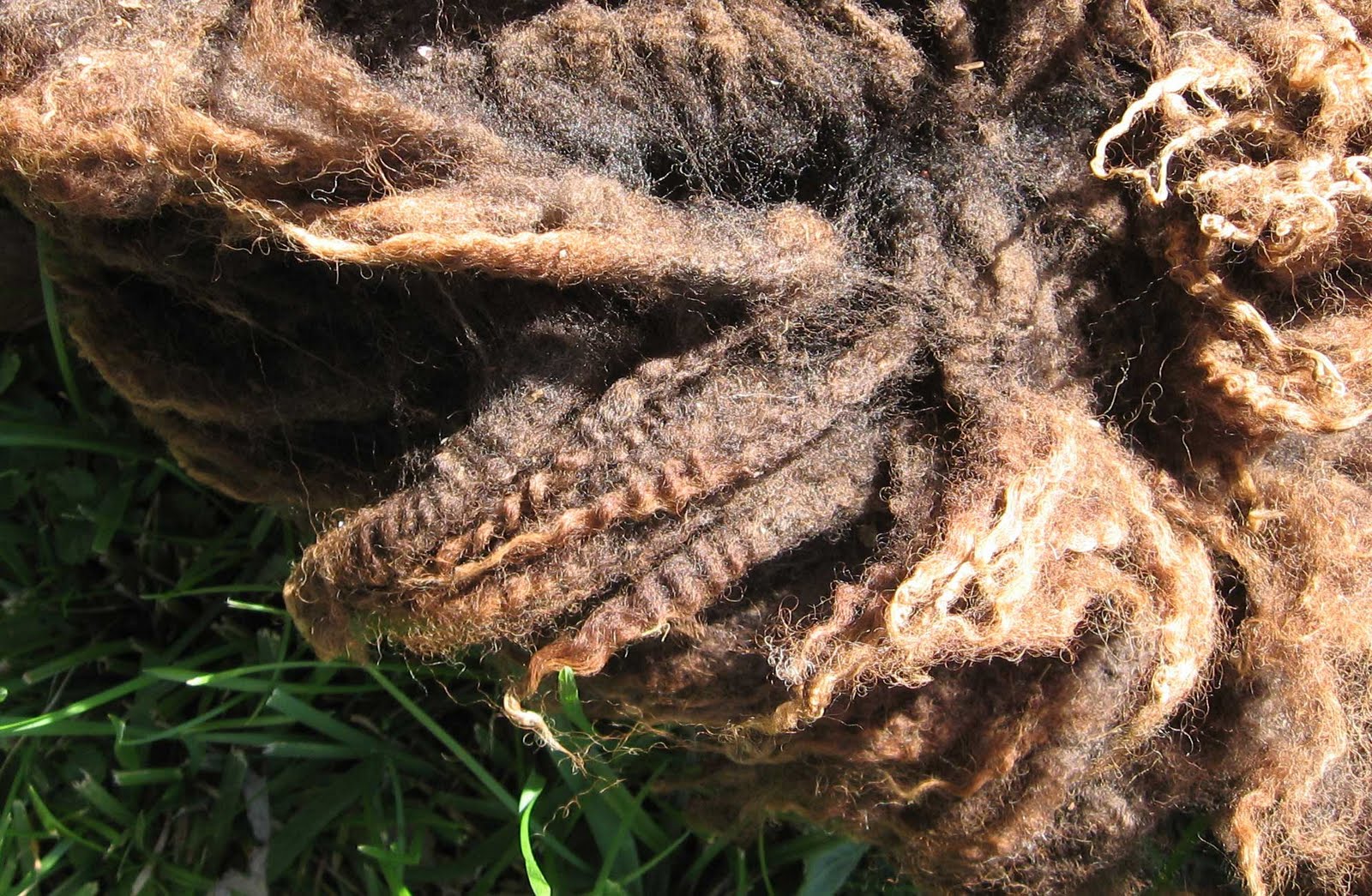
I also purchased a raw fleece and you can see a photo of that if you go on down to a previous post (YST episode 38 and 39).

Cleaning out the spinning basket

My spinning basket is probably much too large for my own good, and it seems to accumulate odds and ends of fibers that won't spin into enough yarn for projects. Last month I decided it needed a good turning out, and that I would spin up those odds and ends. Since there was a very wide range of fiber types, I did not try to combine them into the same yarns. I just spun each fiber and got whatever yardage of 2 ply I could from each of them.

Wide variety of yarns on niddy noddy:


The cormo and silk will go in my spinning stash, I am sure I can combine them with something in a project sometime. The white spaelsau will go into my spinning supplies to be used as leader yarn on my bobbins as I need it. The brown alpaca had the most yardage (170 yards) and is a good start for something so into the stash it goes. The final thick black spaelsau is an interesting yarn, not for clothing for sure, but I love how dark this natural color yarn turned out. However I have no idea what I will use it for.

Such fun, cleaning out the spinning basket!

YST Episodes 38 and 39

I've published two podcasts since last posting. Both are on this website or on Itunes at Yarnspinners Tales.

Episode 38 is about what to look for when you are shopping and purchasing a raw wool fleece. You can know so much ahead of time by just studying the different characteristics of the sheep's breed, and by having a general idea of what project you would like to use the resulting wool yarn. In this case I didn't really have any photos to post for the podcast.

Episode 39 continues the discussion, with non wool fibers. The second half of the podcast handles the question, OK now I have all this fiber, how do I store it?!

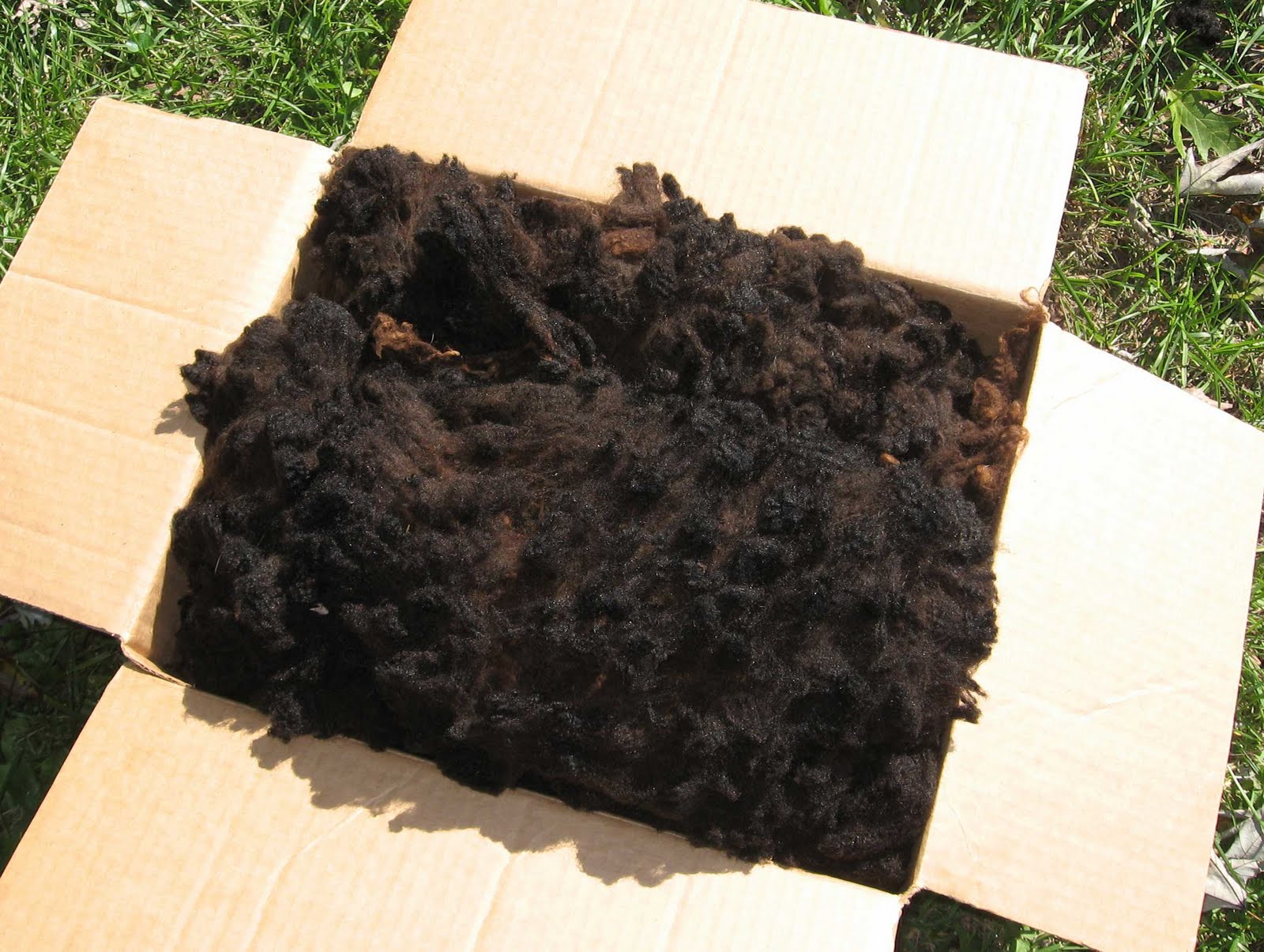
In between the recording of these two episodes I did have the chance to go to a local fiber fair, and purchase a raw romney fleece. So I used that as one example for storing your fiber. Here's a few photos to go along with that.
Whole fleece:


Lock Closeup


For those that wonder just how much is lost when I take out what I don't like in a fleece:


Final temporary storage until washed:

A Bit of non fibery goodness

First, I realize I haven't blogged in forever. Life is like that for me. I spend an equal amount of time at the computer every day, but what I do on the computer during that time varies extensively. Now and then I realize I have neglected some areas and have to play catch up.

Although knitting and spinning are a major part of my life, I do have lots of other interests, hobbies, loves and commitments. I thought I would share one of those today, my love of gardening.

I love gardening for many reasons, but this fall I got to experience one of those reasons that rarely happen. Things finally fell into place for me to try a fall planting of some greens. And although I will have to harvest the last of them today before the first hard frost hits over this weekend, and although they are still by many standards tiny, they are a chance to experience greens unlike those one can grow in the spring.

Here's a plate of the tender dainties just before I put my chicken salad on top of them:


There are two types of leaf lettuce, green and red as well as baby spinach and chard leaves in that mix. They taste like that perfect spring lettuce.

The thing about spring lettuce is one can get those tender non bitter leaves for only two weeks at least in my gardening zone. The frequent rain and rapidly increasing heat of spring sends the leaves into a frenzy of growth and they are soon bitter and trying to form seeds. Well, who can blame them, that's their job!

However, the drier fall weather as well as a more stable and cooler temps in the fall meant they grew very slowly, staying small and mild.

Why is this amazing? Well, it's all about luck, true luck. The seeds had to have enough moisture to sprout (often the fall is too dry) we had to have enough non frost days to let them even get this big. I could try to do this again every year from now on, and not get this type of success. And that's why I love to garden!

The lettuce just before picking:


Spinach and radishes( did not do as well)


Two thirds of the harvest (I left some in the garden as an experiment on just how long it will survive the cold)

Friday, October 09, 2009

Finished socks


My finished projects have been few and far between this year. I have been working on these socks for far too long, since they were generally my 'travel' knit project. I would work on them only at knit nights, or when traveling. And in keeping with that, they were finished in Sept, while I was on vacation, and visiting my mother.
Details:
Yarn: Hempathy by Elsebeth Lavold 3.25 balls
Needles: circs size 2
Method: 2 socks on 2 circs
Pattern: Seduction Socks by Ann Budd

YST Episode 37 September 2009 Spin In

When I do a spin-in podcast, I often will review different breeds of sheep, talking about their history, fleeces and the yarn you can spin from them. Episode 37 (posted Sept 12, 2009 and found here or on ITunes as Yarnspinners Tales) reviews two breeds, the Southdown and Polworth sheep.

Here are photos of each of those samples (you should be able to click on the photo to enlarge). First the Southdown:

And this is the Polworth.


These breeds were opposites in the way I liked to prep the fiber for spinning. The Southdown did better as a combed prep and the Polworth did better carded. Listen to the podcast for lots more details on these two breeds.


MIA

Sometimes it amazes me just how fast time flies. I could not believe it was mid Aug when I last updated this blog.

I was busy though, with mainly non fibery things. Work related classes and a certification exam. A wonderful vacation. The never ending housework and gardening, including mowing. Another podcast. Some clothes sewing (mostly alterations). Several batches of tomato sauce made. Some knitting, some spinning, and much handspun yarn listed on my Artfire Store, ZavagantStudio. This is just what I can remember this morning, with only one cup of coffee in me.

Sometimes I wish I kept better journals about my day to day. It just seems that actually doing the 'day to day' gets in the way of doing just that. But really it's like any habit, once established, will be easier to do everyday. And I just have not established the habit of recording my daily life.

Still, blogging and other internet journal records (like my gardening journal and Ravelry) have aided me in getting at least more recorded than I would have before their advent. For this I am truly grateful. There is so much satisfaction in going back on this blog two years, and reading all about what I was doing with spinning and knitting. There's a joy to go and look on my projects on Ravelry and see the completed photos. Oh of course there were dozens of other knitted projects and spun yarns before that, but at least it's a start. I am a firm believer in archiving the day to day of everyone, because ultimately that is our true history.

Thursday, August 20, 2009

YST episode 36 Spinning on a Charkha

I can not believe I am at the 36th podcast! It will soon be two years since I started this creative adventure.


Episode 36 of Yarnspinnerstales is all about spinning on a charkha, and this time I have two special guests sharing their experiences with their Bosworth book charkha. I also do a review of the DVD Charkha Spinning Tips and Techniques, by Elaine Benfatto.


But best of all, there is a Youtube video that not only shows spinning on the charkha but is explained in detail by my daughter. Check it out here.


A few photos just to show you the charkha. First, closed showing that it really is the size of a hard back book:


Next, the charkha opened, showing just how neatly everything fits inside:


And finally, the charkha opened and set up ready to spin:


Be sure to check out the webpage for the podcast, as I have posted lots of links there that relate to spinning with the charkha.


Sunday, August 16, 2009

Items for 2009 state fair

Only five items going to the state fair this year. One is my beaded mystery stole, which I have posted about before and so I will not include in this post. The second I've posted a progress photo already, the targhee/bamboo skein of yarn. I've been playing around with arty shots of yarn, so here's one of those with that skein. The photo has not been though any photo shop editing, which I would do before using it, if I plan to sell this yarn. Right now I haven't decided.

The next item needs more explanation. I submitted for the designer yarn category a skein of cashgora goat and silk 2 ply skein. The idea is to try and copy the Orenberg style yarn.

Here's a photo of that skein of yarn.

There's a number of reasons this skein does not come close to true Orenberg yarn. First, cashgora is never going to be a good replacement for the goat down used in the true yarn. Cashgora, at least what I have, is very scratchy. The Orenberg yarn I have has a bit of scratch, but not enough to be uncomfortable. I really doubt I would wear a shawl of my yarn. Second, I did not get my spinning quite thin enough on either single to make the 2 ply the WPI of the original yarn. I'm off by about 4-5 WPI. It felt like I was spinning thin enough, but the final skein after washed was not as thin as the original.

When I was plying this yarn, I did two different skeins. One I plyed with my Ashford, with the lace flyer and aimed for a very loose ply. After it was washed I had quite a few areas in the yarn where the cashgora popped out, like little tiny locks. It was a neat yarn, but not what I had in mind. So the second skein (which is shown above) I plyed on my Roberta, and went for what would be considered tradition balanced ply. I liked that yarn much better and it actually matched the look of the original yarn.

The other thing I about this skein is that I handled it differently than I have most yarns after washing. I washed the skein, hot soapy water, rinsed good, dried in a towel and hung the skein in front of a fan until it was just barely damp. Then I put the skein on the skein winder and wound it off on to my PCV pipe niddy noddy. I was putting tightness into the skein, stretching it while it completely dried, by doing this. Every now and then while it was drying I pulled on the skein so I pulled the area that was wrapped around either end was moved off the curve. I hope that makes sense, I was trying to prevent the yarn developing a permenent curve in it. The only other time I have used this method with a skein of yarn is when I do 100% angora.

The result of doing this with the skein gave a very smooth crisp yarn, with very little halo. That matched the original yarn, at least in appearance.

One of the requirements for this designer category is to knit a swatch, at least 6 inches square. I have always been very uninspired for these swatches in my past entries, so I decided to get very creative this time. Since I was trying to make an Orenberg style yarn, I went to those books I have and discovered that the Gossimer Webs Designs book had a small sampler practice shawl that would be within that size range. It took me two days of knitting and I had a wonderful time discovering the construction concepts of these shawls. The resulting swatch looked like this:


I had to come up with another creative solution to block it. Regular size shawls are blocked with wires and pins, but this little swatch seemed overwhelmed by blocking wires. First I tried pinning it to a towel, like I do other swatches and found I couldn't pull the swatch hard enough, the towel would just scrunch up underneath taking my swatch with it. So I finally hit on the idea of placing a square of cardboard on top of the something soft that pins wouldn't hurt. You could use the bed, but to make mine portable so I could prop it in front of a fan, I use a new package paper towels. The pins just pushed right through the cardboard, into the package and I soon had my swatch pinned out nice. Here's a close up:


It looks so lovely and actually developed quite a halo as I was knitting. I enjoyed knitting with the yarn a lot, it actually had that crisp feeling like linen. But what that means is that the final product is sadly very scratchy. It won't soften either like linen. So while it has been a very fun project, I will not be spinning any more of this yarn. I seriously doubt the spinning judge at the fair will like the yarn either, but probably for different reasons.
The last category I submitted an entry for was to knit something in natural color handspun yarn. You even had to submit a lock of the fiber as well as some of the yarn. I used some Black Welsh Mountain handspun and the pattern Bella's Mittens (look for the pattern in Ravelry it is a free pattern). The mittens are made to go up to the elbow.


I could not get the best photos of these. The yarn is very black but looks lighter in the sunlight. Also it's a bit tricky to take a photo of one hand inside a mitten and the other hand holding the camera to take the photo. But in spite of the mittens looking like cooking mitts, you can get the idea of what the pattern is like. They fit me perfectly because I could try them on as I worked and I got the decreases to hit where they needed to be. And they will be exceptional warm this winter.


After working for many weeks with this deadline looming, I feel lost as to what to work on now!


Friday, August 14, 2009

A knitting spider

I had several titles for this blog story, 1. The bungee jumping spider, 2. The trapeze spider, and 3. Boing boing boing. I decided since this is a fiber blog I would at least give the title a knitting slant.

I live in a very old country house and because of that I tend to 'share' my house with nature, often unwillingly. For this reason, I have learned to be very observant, and am often quick to spy the unwelcome guest.

Now this story starts with my overhead fan. On it, I have a lovely ceramic chain pull, a knob to grab and pull to turn off the fan. It's quite country looking, with a painting of a mallard duck. The ceramic pull itself is hollow in the center. So this morning, when reaching up to turn off the fan, I noticed a brown blob in that hollow center, and thought to myself, hmm dust bunny. Except the blob moved and I immediately knew it was an unwanted guest.

So I did what most anyone would do. I gave the knob a strong flick with my finger, thinking that the insect would drop out and I could deal with it better. The knob swung violently back and forth and yes, the blob dropped out, but with a surprise.

It was a knitting spider, and it was using a lifeline.

I see some very strange and sometimes outright funny things here in this country house. But nothing recently has tickled my funny bone like this high flying spider. As the knob swung back and forth, so did she on her life line, looking for all the world like a trapeze performer at the circus. But the tricks continued, as she swung she also climbed her bouncing lifeline, looking now like the bungee jumping spider. She was tucked back up into her hiding spot long before the knob stopped swinging.

I must confess, she's still there. She's not a scary looking spider, and hasn't moved all day. Maybe she finally feels like the hangover is gone. There are times when I look at that knob and get tempted to whack it again, just for the giggle, but I am kind hearted by nature. Besides for all I know, this is the time she forgot to put her lifeline in her knitting.