Exploring the world of fiber, one draft at a time

My posting can be as frequent or infrequent as my spinning, so be as patient as that fiber, sitting in my stash.

Thursday, December 17, 2009

YST episode 42 Spinning experiments

Episode 42 of Yarnspinnerstales podcast is posted and continues the theme of intentional spinning of a yarn. For this podcast, and this blog post I share some of the things I learned while trying to follow a statement made by Judith MacKenzie McCuin in the book Intentional Spinning that you can make thicker or thinner yarn with your spinning wheel, by changing nothing but the tension. If you increase the tension and do not change the treadle speed or drafting you will get thicker yarn. The opposite, decreasing tension will create thinner yarn. I knew the spinner's rule of thumb that if you wanted thinner yarn, you should spin with less tension, but this took the idea one step further. It was creating a way to have any spinning wheel spin any size yarn. I decided to experiment with two of my spinning wheels, the electric Roberta, and the Haldane double drive.

Right off the bat, the Roberta has the difference that I do not need to treadle. Instead there are various settings on the speed control, which would relate to treadle speed. I had the advantage that I could keep the speed even, unlike on a non electric spinning wheel. However there is a disadvantage to the Roberta in that it has no way to really tone down the strong pull in created by the bobbin driven set up. Even if I completely remove the tension spring that runs over the flyer, I will still get pull in, due to the bobbin tension always being the same(there is a rubber ring running from the bobbin to the electric motor, speed will change and increase pull in, but even at slow speed there is still a significant pull).

But this is exactly why I wanted to try the experiment with the Roberta, to see just what type of yarn would be spun, trying to keep everything the same except the tension spring. I did do my samples with three different speeds, slow medium and fast. This was a second part of the experiment, I was mainly looking for the ideal speed, given the parameter of increased or decreased tension.

So first I spun my default yarn, both with the tension spring on and off. Both came out to be a 12 WPI 2 ply. These two photos show those samples:


Changing speed made no difference, however I did get a thicker yarn when the tension spring was off, which so far did not match the expected results. It could be because I rarely spin with that tension completely off and it was affecting my spinning.

Next I increased the tension by attaching the tension line and spring and tightening it to the point that the spring was standing taut but not spread open. This increased the pull in dramatically and I immediately was spinning much thicker yarn around 8 WPI. I could get even thicker yarn by increasing the speed, I have the medium speed show here at 6 WPI and got the same thing when spinning at a fast speed (not in photo):


I next reset my Roberta back to how I generally have it set to spin my default yarn. I spun some of that 12 WPI 2 ply, and then started to decrease the tension for a thinner yarn. I completely removed the tension line but was not having much luck creating thin yarn. The next thing to try was to keep the tension spring off and then criss cross the yarn on the bobbin. I saw immediate results, the single thinned out but was not going any thinner than my normal default 12 WPI 2 ply. Here's the photo of all three speeds:
All of the above experiments are based on the premise that treadle speed and drafting stays the same. I finally gave in a split the roving into half of what I had been using, which really thinned the drafting zone. Keeping the other settings the same as above, I finally came up with a very nice even 18 WPI 2 ply.
There's definately proof that yarn diameter can be affected by the increase or decrease of tension. The electric spinning wheel, with it's bobbin driven style may not be the best example of this premise, however I learned so much just doing this simple experiment and now have more skills with the Roberta to spin the type of yarn I want.


Another of my spinning wheels, the Haldane, has had the reputation with me of only being able to spin sock yarn. It is a small wheel, with a small drive wheel which means treadling is often used to compensate for it's lack of range. Likewise it only has two ratios, which I have never understood on a wheel, unless it's just so small that larger ratios would make the operation clunky. But it proved to be the perfect wheel to once again try the tension experiment.


I used the same fiber to keep all factors of the experiment as close as possible. I used a well processed merino top, since I wanted to have a fiber that would draft smoothly and not require me to stop and pick out VM or neps. All the samples were very small, and were created by pulling just spun single off the bobbin and letting it self ply back on itself before measuring the WPI.


First I spun a sample of my default yarn, again a 12 WPI 2 ply. I was spinning on the larger of the two ratios and trying to keep my treadle speed and the drafting the same. I then increased the tension (turn the knob that raises the flyer, tightening the drive band) Of course I felt strong pull in, and also found it was very hard to keep the treadle speed the same, it was much harder to treadle. The yarn thickened up immediately, although it took me a bit of practice to keep the drafting zone even and the twist consistent through out the yarn. The middle sample in the photo below shows my struggle, the bottom sample yarn shows it finally working into a 6 WPI 2 ply:


I reset the spinning wheel back to my default settings and spun some default yarn, and then decreased the tension (still on larger ratio) That yarn is shown as the first decrease tension in photo below which was 14 WPI 2 ply. Then I moved to the smaller ratio and got a finer yarn at 18 WPI (although I had more consistent twist with the larger ratio)


At first I caught myself treadling faster to compensate for the feel of less pull in, but I caught myself doing it and realized I should be keeping the treadle speed the same, and slowed down. I was surprised to find the yarn stayed thin just as before, I just was spinning as much in the same time period.


The last yarn in the photo is an amazing 40 WPI 2 ply that was made after criss crossing the single on the bobbin. It's merino and will relax after sitting, and I just remeasured that WPI as 32 WPI but still, thin is thin!


One comment made in the book is that if you can not go down any more ratios (now true on my Haldane) then you should criss cross the yarn on the bobbin, which is like going down another ratio. I had never tried this on the Haldane, for one thing the way the hooks look on the flyer your first impression is that they are backwards for doing the criss cross. But I found that I really could hook the single on the opposite side and then back to the hook that fed the yarn out the oriface. The only real problem is that the yarn on the opposite side rides very close to the bobbin yarn, it seems to me it could rub as the bobbin fills up.
This angle shows the 'opposite side' on four hooks and then across the bobbin and hooking on the oriface side on three hooks. I found when doing the criss cross, the opposite side is usually on one hook more than the oriface side.


So I have to eat humble pie and no longer say that my Haldane can only spin sock yarn. The wheel is perfectly capable of spinning a lovely lace yarn, as long as I am willing to pay attention and not just sit down and spin my default yarn.


I learned so much from this experiment and I would encourage other spinners to grab some lovely leftover bit of top and try it too with their wheels. You may learn a whole new skill your wheel has, that you never knew.

Monday, December 14, 2009

Nostalgic Knitting

My last two knitting projects sent me down memory lane and it got me wondering: Will our grandchildren love our knitting projects of today as much as I love my grandmother's patterns?

Every now and then usually around this time of the year I knit what I fondly call grandmother slippers for someone as a gift. That's because it was the first thing I was taught to knit, by my maternal grandmother. Oh there may have been the endless garter stitch something that was really nothing, but the slippers are burned in my memory as my first project. As are the directions for the slippers, well almost. I can cast on and knit up the first 6-7 inches, but when it comes to decreasing to fit over the toes, I never remember the formula. Oh I have it written down-in my grandmother's handwriting no less, tucked away with the other precious things I want to keep. I may have even transcribed the pattern but who knows where that copy ended up. No instead I do as many of us of the digital age do, and go and search online for a pattern to follow. It turns out that I am not the only one with fond memories of this slipper pattern, although it was someone's Aunt Maggie that taught them. So I knit my slippers like I have been doing so much lately, with the pattern on the laptop beside me as I knit. How different and yet maybe not so different, to compare that to a grandmother sitting in her chair near you, knitting, and telling you what to do next. See, my grandmother really didn't teach me how to knit from a pattern until much later, because so often, she didn't knit from patterns either. It wasn't until I was ready to make things that she would not have knit, that I had to learn to read that special language of knitting.

The second project, currently on my needles is a dishcloth. Now my grandmother was not knitting dishcloths in her early life when she was teaching me to knit. No, knitting dishcloths triggers a memory for me, of her knitting late in her life, now blind but unwilling to give up knitting. Those dishcloths were often crooked, and had unintentional lace openings, as she would miss a stitch. But they were treasured, and definitely put to use. As I sit and knit on this dishcloth today, I am amazed at her ability to continue to knit by feel alone. I find my eyes glued so permanently to the stitches that I only listen to the TV show, how will I ever learn to just knit by feel alone! And she was not doing the dishcloths that are cast on with 35 stitches or so and knit square. Nope, she was doing the corner to corner, increase and then decrease pattern. And yet, I can understand exactly the love to knit that put the yarn and needles in her hands.

I found out this Thanksgiving that the niece I taught to knit two years ago is now knitting Christmas presents _and_ teaching someone else to knit. My heart glowed when I heard that, passing on the art means so much to me.

As does archiving and passing on the patterns. As I sat and knit from the pattern on the laptop, it made me wonder, is this a good archival tool? In many ways, yes, because so much of the information is available to a wider knitting audience. And the patterns should stay available unless we have a true digital meltdown. It's like an instant access to a knitting only library and that is all kinds of good. What I personally will miss is the thrill, laughs and just plain fun of finding a pattern book from the 1940's and looking through that booklet. It has all the problems of archival paper, it's yellowed, it's brittle, it's been written on, torn, and has a missing cover. But there is just something to having those patterns in you hands, dreaming the same knitting project dreams that another knitter also had, that just can not be duplicated by a pattern on the internet. I think this is why, ultimately the book industry will stand firm in this digital age, and why we as knitters will continue to love the new books as they appear. And maybe instead of looking up grandmother's online bookmarks, our grandkids will have the same love of books too.

Wednesday, November 25, 2009

Keep on scrolling

I just posted five (yep five) blog entries today. So scroll on down to be sure you see them all.

Carry on...

A yarn dyeing commission

Even a fiber vendor like myself has their secret fiber obsessions and mine happens to be the vendor Natural Obsessions. There's many reasons, her range of fibers available, her great eye for color, her dyeing skills and most of all, her love of a challenge.

So I sent a challenge her way. I wanted enough hand dyed lace weight yarn in fall colors for a shawl. We discussed the options of different yarn fibers and I finally decided on bamboo. I have four shawls already in wool/silk and thought it was time to add something new to the wardrobe (er I mean knitting stash).

Drum roll please....the resulting yarn is stunning:


It's so hard to capture the true colors when the day is cloudy. I put the skein on the window sill in the daylight for a closeup and more accurate photo of the wide range of colors:


I had a pattern in mind when I commissioned the yarn, however I plan to do a large swatch first to see if that pattern is the perfect shawl for this multicolored yarn. It's such a special yarn, I want to find a pattern to do it justice.

Fiber fair purchases

Back in Oct I went to a fiber fair in Corydon Ind. Of course I bought stuff, what a silly question!

The wonderful white fiber is a blend of merino top and mulberry silk, it's going to be amazing to spin. The small material bag was sewn by a local artist and is for storing your DPN. I loved the fabric but what I loved even more was the magnetic closure she used, no chance of a stray needle migrating out and getting lost.


This is a braid of dyed BFL wool:


And the vendor right next to that was selling the BFL wool sock yarn:


Both are super soft fiber.

I also purchased a raw fleece and you can see a photo of that if you go on down to a previous post (YST episode 38 and 39).

Cleaning out the spinning basket

My spinning basket is probably much too large for my own good, and it seems to accumulate odds and ends of fibers that won't spin into enough yarn for projects. Last month I decided it needed a good turning out, and that I would spin up those odds and ends. Since there was a very wide range of fiber types, I did not try to combine them into the same yarns. I just spun each fiber and got whatever yardage of 2 ply I could from each of them.

Wide variety of yarns on niddy noddy:


The cormo and silk will go in my spinning stash, I am sure I can combine them with something in a project sometime. The white spaelsau will go into my spinning supplies to be used as leader yarn on my bobbins as I need it. The brown alpaca had the most yardage (170 yards) and is a good start for something so into the stash it goes. The final thick black spaelsau is an interesting yarn, not for clothing for sure, but I love how dark this natural color yarn turned out. However I have no idea what I will use it for.

Such fun, cleaning out the spinning basket!

YST Episodes 38 and 39

I've published two podcasts since last posting. Both are on this website or on Itunes at Yarnspinners Tales.

Episode 38 is about what to look for when you are shopping and purchasing a raw wool fleece. You can know so much ahead of time by just studying the different characteristics of the sheep's breed, and by having a general idea of what project you would like to use the resulting wool yarn. In this case I didn't really have any photos to post for the podcast.

Episode 39 continues the discussion, with non wool fibers. The second half of the podcast handles the question, OK now I have all this fiber, how do I store it?!

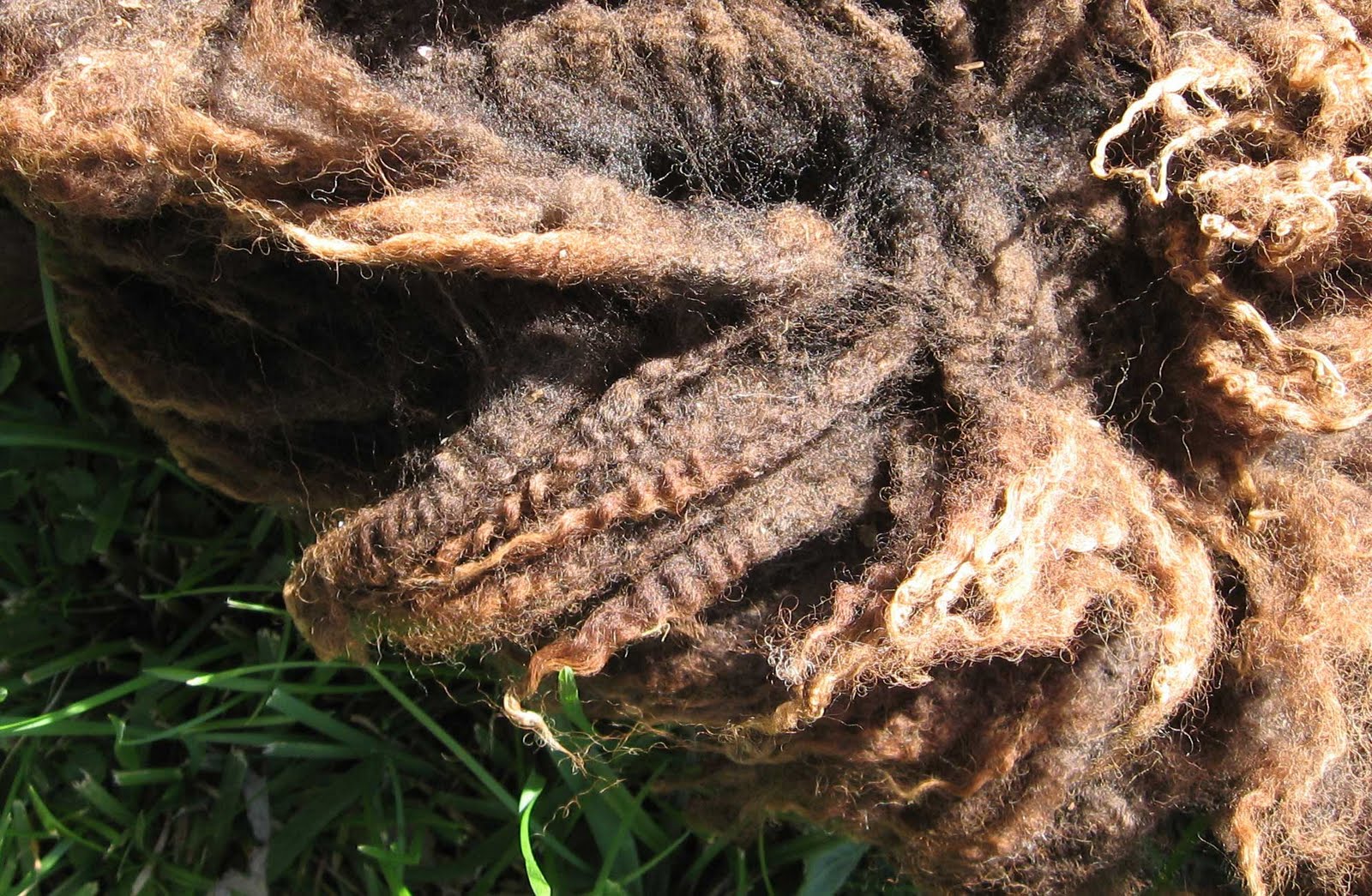
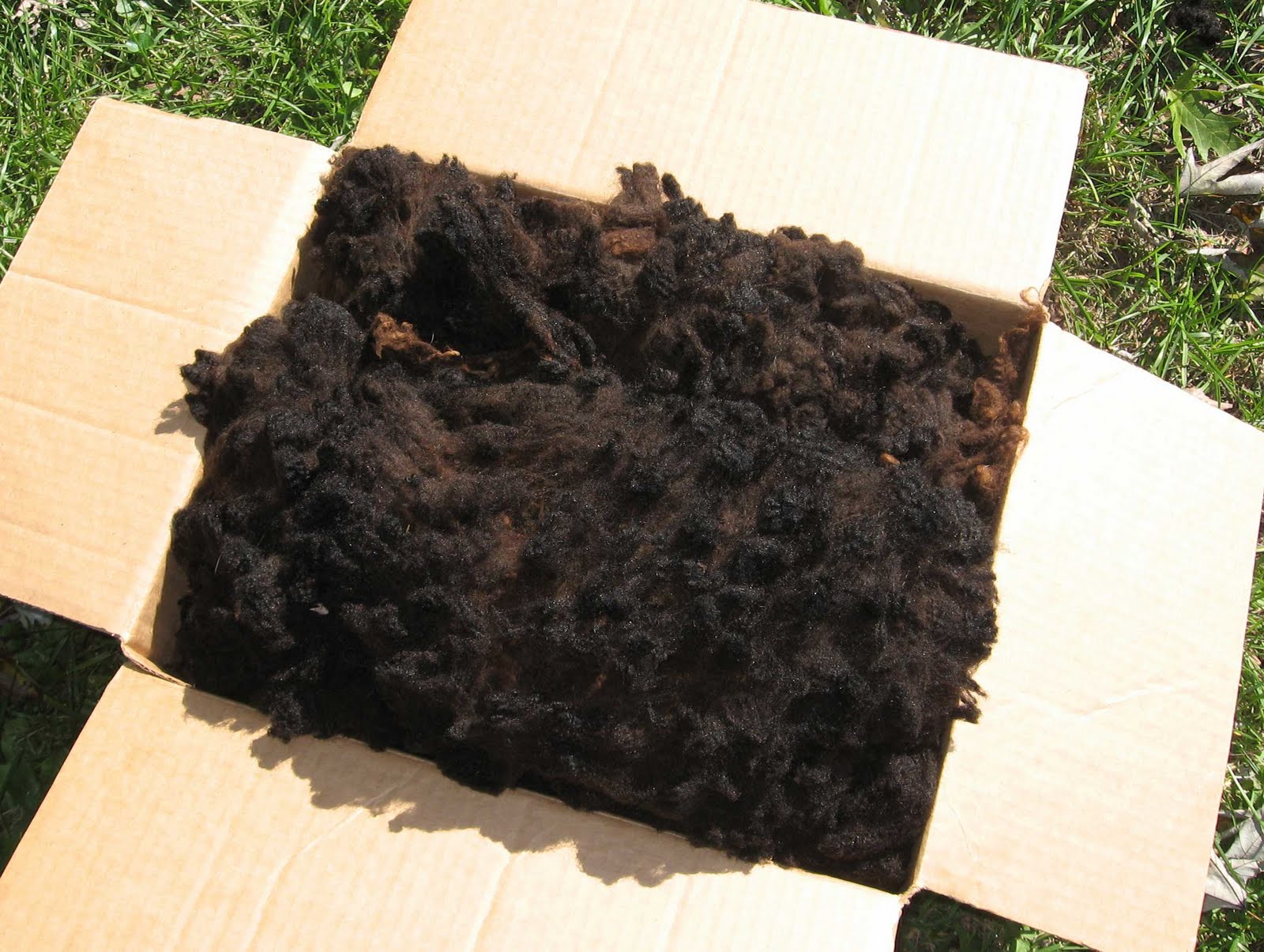
In between the recording of these two episodes I did have the chance to go to a local fiber fair, and purchase a raw romney fleece. So I used that as one example for storing your fiber. Here's a few photos to go along with that.
Whole fleece:


Lock Closeup


For those that wonder just how much is lost when I take out what I don't like in a fleece:


Final temporary storage until washed:

A Bit of non fibery goodness

First, I realize I haven't blogged in forever. Life is like that for me. I spend an equal amount of time at the computer every day, but what I do on the computer during that time varies extensively. Now and then I realize I have neglected some areas and have to play catch up.

Although knitting and spinning are a major part of my life, I do have lots of other interests, hobbies, loves and commitments. I thought I would share one of those today, my love of gardening.

I love gardening for many reasons, but this fall I got to experience one of those reasons that rarely happen. Things finally fell into place for me to try a fall planting of some greens. And although I will have to harvest the last of them today before the first hard frost hits over this weekend, and although they are still by many standards tiny, they are a chance to experience greens unlike those one can grow in the spring.

Here's a plate of the tender dainties just before I put my chicken salad on top of them:


There are two types of leaf lettuce, green and red as well as baby spinach and chard leaves in that mix. They taste like that perfect spring lettuce.

The thing about spring lettuce is one can get those tender non bitter leaves for only two weeks at least in my gardening zone. The frequent rain and rapidly increasing heat of spring sends the leaves into a frenzy of growth and they are soon bitter and trying to form seeds. Well, who can blame them, that's their job!

However, the drier fall weather as well as a more stable and cooler temps in the fall meant they grew very slowly, staying small and mild.

Why is this amazing? Well, it's all about luck, true luck. The seeds had to have enough moisture to sprout (often the fall is too dry) we had to have enough non frost days to let them even get this big. I could try to do this again every year from now on, and not get this type of success. And that's why I love to garden!

The lettuce just before picking:


Spinach and radishes( did not do as well)


Two thirds of the harvest (I left some in the garden as an experiment on just how long it will survive the cold)

Friday, October 09, 2009

Finished socks


My finished projects have been few and far between this year. I have been working on these socks for far too long, since they were generally my 'travel' knit project. I would work on them only at knit nights, or when traveling. And in keeping with that, they were finished in Sept, while I was on vacation, and visiting my mother.
Details:
Yarn: Hempathy by Elsebeth Lavold 3.25 balls
Needles: circs size 2
Method: 2 socks on 2 circs
Pattern: Seduction Socks by Ann Budd

YST Episode 37 September 2009 Spin In

When I do a spin-in podcast, I often will review different breeds of sheep, talking about their history, fleeces and the yarn you can spin from them. Episode 37 (posted Sept 12, 2009 and found here or on ITunes as Yarnspinners Tales) reviews two breeds, the Southdown and Polworth sheep.

Here are photos of each of those samples (you should be able to click on the photo to enlarge). First the Southdown:

And this is the Polworth.


These breeds were opposites in the way I liked to prep the fiber for spinning. The Southdown did better as a combed prep and the Polworth did better carded. Listen to the podcast for lots more details on these two breeds.